Cast Iron vs Stainless Steel Grill Grates
Cast iron sears best but demands the most maintenance; stainless resists rust best but sears lighter. Cast iron (bare or porcelain-coated) holds and radiates the most heat of the common grate materials, giving the deepest sear marks, but rusts quickly wherever seasoning or coating is broken. Stainless steel resists rust the best and needs the least upkeep, at the cost of noticeably lower heat retention. Porcelain-coated steel splits the difference at a lower price, but chips and rusts fastest of the three once damaged.
The one thing to know: Grate material trades three things against each other: heat retention, rust resistance, and maintenance. Cast iron (bare or porcelain-coated) holds and radiates the most heat for the deepest sear marks but rusts fast if the seasoning or coating is scratched. Stainless steel resists rust the best and needs the least maintenance but holds noticeably less heat, so sear marks are lighter. Porcelain-coated steel is the budget default — decent heat retention while the coating holds, but it chips over time and rusts quickly wherever bare metal is exposed.
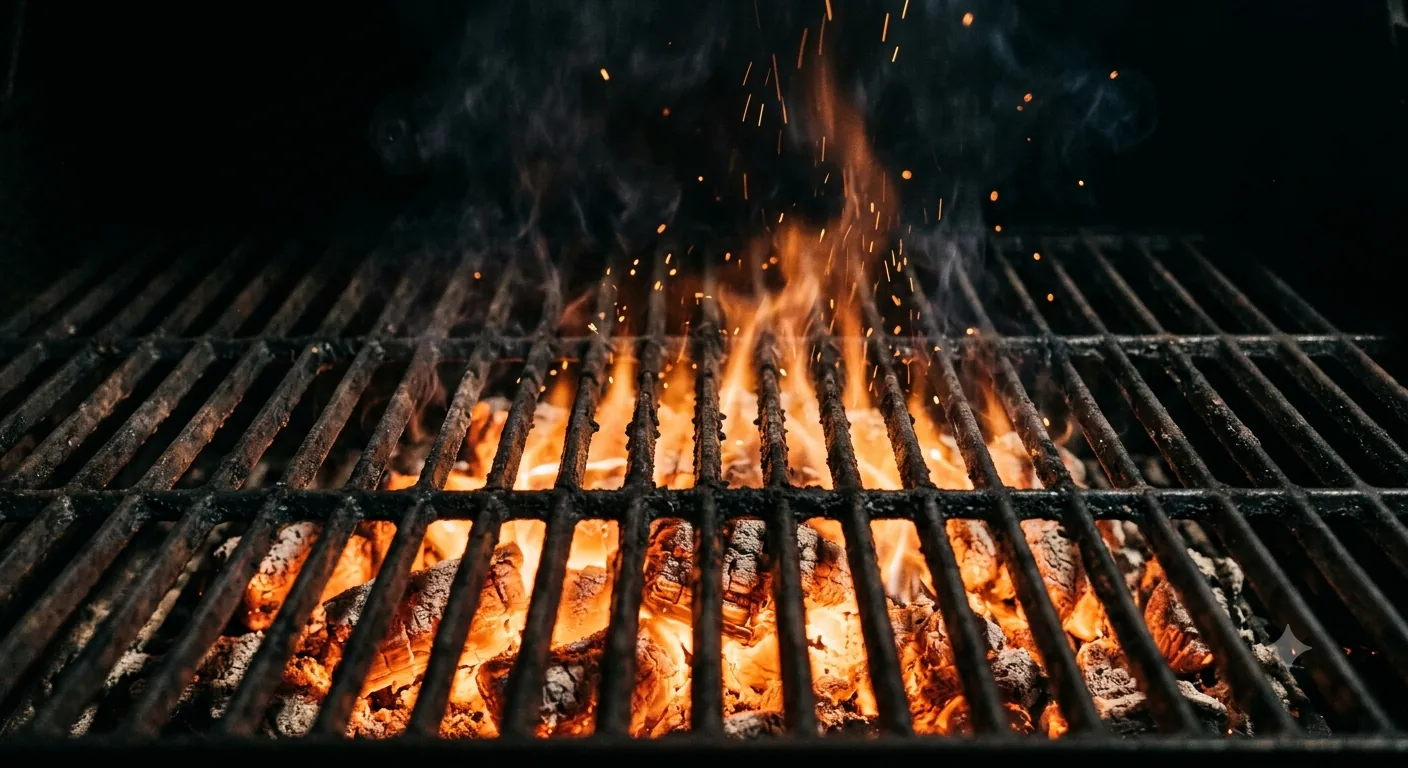
Cast iron: best heat, most upkeep
Cast iron's density lets it store and release heat efficiently, producing the deepest, most consistent sear marks of the three materials. Bare cast iron needs regular seasoning (a thin oil layer baked on) to resist rust; porcelain-coated cast iron skips the seasoning step but rusts fast at any chip or scratch down to bare metal — avoid metal scrapers and grill brushes with wire bristles that can chip the coating.
Stainless steel: least maintenance, lighter sear
Stainless resists rust far better than cast iron or porcelain-coated steel because chromium in the alloy forms a passive protective layer. It holds less heat, though, so sear marks are lighter and grilling takes slightly longer to develop good color. In humid or coastal climates it can still develop cosmetic tea-staining or minor pitting without regular cleaning, but it won't rust through.
Porcelain-coated steel: the budget default
Most entry-price gas grills ship with porcelain-coated steel grates — decent heat retention while the coating holds, at the lowest upfront cost. The coating is thinner than cast iron's and chips more easily, and once breached the steel underneath rusts quickly, making this the highest long-term maintenance option despite the cheapest sticker price.
This page is general materials information; actual longevity depends on cleaning habits, climate, and how the grates are stored between uses.
Frequently Asked Questions
Neither is universally better — they trade heat retention against maintenance. Cast iron holds and radiates the most heat for the deepest sear marks but rusts fast if the seasoning or porcelain coating is scratched. Stainless steel resists rust best and needs the least upkeep but sears slightly lighter because it holds less heat.
Yes, at any point where the coating chips or scratches down to bare metal — the coating protects the iron underneath but isn't rust-proof once breached. Regular light oiling and gentle cleaning tools (not metal scrapers) extend coating life.
Stainless can develop light surface tea-staining or pitting in humid or coastal climates if not cleaned regularly, but it doesn't rust through the way bare or chipped cast iron does. It's the lowest-maintenance option of the three common materials.
They're the budget default — a steel grate with a porcelain enamel coating, giving decent heat retention while the coating is intact. They chip more easily than cast iron's thicker coating and rust quickly at any exposed spot, making them the highest-maintenance option over a multi-year lifespan despite the lowest upfront cost.
Cast iron, because it holds and radiates the most heat of the three materials, producing the deepest, most defined sear marks — the tradeoff is it demands the most maintenance to keep that performance rust-free.